Top 10 Vehicles With the Highest DUI Rates
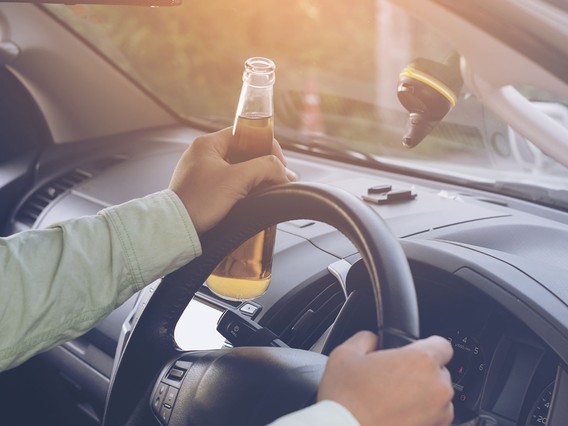
Almost one-third (32%) of all traffic fatalities include a drunk driver, according to the National Highway Traffic Safety Administration (NHTSA).[1] Compare.com data reveals that roughly 8 in 1,000 drivers (0.77%) have received a DUI in the past three years. On average, those drivers see a $634 annual rate increase for full-coverage auto insurance.
The BMW 4 Series has the highest share of drivers reporting a DUI, at 4.3%. But the Chrysler Pacifica delivered perhaps one of the more surprising findings. Our analysis found that drivers of the family-friendly Pacifica have a DUI rate of 2.7%. This means that about 1 in 37 Pacifica drivers report having a DUI within the past three years.
Driver-monitoring technology is common across the sedans, SUVs, pickups, and minivans on our list. Eight of the 10 vehicles offer some form of driver-attention or drowsiness monitoring that flags fatigue and distraction. But this technology can’t mitigate the risk of driving impaired.
1. BMW 4 Series
DUI likelihood: 43 out of 1,000 drivers
DUI rate vs. national average: 5.6x higher
Average annual premium with a DUI: $4,831
Average post-DUI premium increase: 41%
The 4 Series has the highest share of drivers with a DUI among all vehicles in Compare.com’s quote database, at 4.3%. Compared to the national rate for all vehicles, 4 Series drivers are 5.6 times as likely to report a DUI. After receiving a DUI, drivers can experience an average rate increase of 41%, or about $118 per month.
The base model 430i Coupe sports a 2.0-liter turbocharged four-cylinder engine and goes from 0 to 60 mph in 5.6 seconds. With higher models reaching 4.2 seconds, these vehicles may attract more thrill-seeking drivers. The 4 Series also stands out across other measures of driving risk, ranking at the top of our list for drivers with the highest share of accidents and speeding tickets.
2. Chevrolet Blazer
DUI likelihood: 38 out of 1,000 drivers
DUI rate vs. national average: 4.9x higher
Average annual premium with a DUI: $3,963
Average post-DUI premium increase: 57%
The Chevrolet Blazer is one of three SUVs on our list. It has the highest DUI rate in the class, with 3.8% of Blazer drivers reporting a DUI in the past three years. After a DUI conviction, car insurance rates increase by an average of 57% for Blazer drivers, adding about $120 per month to premiums.
The Blazer’s 308-horsepower V-6 engine, selectable Sport mode, and available twin-clutch AWD give drivers ample power and responsive handling. The RS trim adds oversized wheels, dual exhaust, and sporty styling, features that make it easier for drivers to reach and maintain higher speeds.
3. BMW 8 Series
DUI likelihood: 38 out of 1,000 drivers
DUI rate vs. national average: 4.9x higher
Average annual premium with a DUI: $5,009
Average post-DUI premium increase: 9%
Despite ranking near the top for DUI shares, at 3.8%, 8 Series drivers experience the smallest insurance rate increase after a DUI conviction, with average premiums rising just 9%. One reason for the smaller increase could be that the 8 Series’ premiums already reflect a higher financial risk related to its costly repairs, advanced technology, and high-end materials.
The M850i xDrive has a 523-horsepower V-8 and can reach 60 mph in 3.7 seconds.
4. Chevrolet Bolt EUV
DUI likelihood: 37 out of 1,000 drivers
DUI rate vs. national average: 4.8x higher
Average annual premium with a DUI: $5,249
Average post-DUI premium increase: 91%
The Bolt EUV is the only fully electric SUV in our top 10 list, yet 3.7% of its drivers report a DUI within the last three years. On average, Bolt rates increase by 91% after a DUI, bringing monthly insurance costs up by $209.
Discontinued in 2023, the Chevrolet Bolt EUV originally had a starting price below $30,000 and a 247-mile EPA range. Loaded with driver-assistance safety technology and a 65 kWh battery pack, the Bolt EUV weighs about 3,700 pounds. It’s relatively light for an EV, though its battery pack still adds substantial weight compared to gas-powered cars of similar size.
Chevrolet brought the Bolt back for a limited 18-month production run for 2027. Although Chevrolet dropped the EUV name, the redesigned Bolt retains the crossover-inspired body shape of the EUV.
5. BMW 2 Series
DUI likelihood: 34 out of 1,000 drivers
DUI rate vs. national average: 4.4x higher
Average annual premium with a DUI: $4,945
Average post-DUI premium increase: 58%
Compared to the 4 and 8 Series models, this luxury coupe has a lower DUI rate of 3.4%.
The sporty and compact BMW 2 Series is the smallest of the three BMWs on our list and serves as an entry point into the luxury brand’s lineup. But entry-level doesn’t mean underpowered.
The base 230i produces 255 horsepower and can reach 60 mph in 5.5 seconds, while the M240i, with 382 horsepower, can reach 60 in 4.1 seconds. Both the price point and the styling, including the plentiful interior and exterior customization options and smaller cabin, target younger drivers.
6. Jaguar XF
DUI likelihood: 34 out of 1,000 drivers
DUI rate vs. national average: 4.4x higher
Average annual premium with a DUI: $5,379
Average post-DUI premium increase: 81%
Jaguar XF drivers see an average 81% increase in car insurance rates after a DUI conviction, adding about $200 more per month to their insurance costs.
Jaguar designed the XF around the sensory experience of driving with higher-end interior features. Under all that polish is a car that can still move, with a 5.8-second 0–60 time and a top speed of 155 mph.
Quick acceleration time paired with a high top speed can compound the risks of impaired driving and increase the potential for a serious crash. The XF’s luxury materials and technology can make even minor damage more expensive to fix. Jaguar discontinued the XF along with four other models in 2024. Replacement part scarcity combined with the need for specialty technicians could potentially increase future insurance rates for this vehicle.
7. Hyundai Ioniq 6
DUI likelihood: 33 out of 1,000 drivers
DUI rate vs. national average: 4.3x higher
Average annual premium with a DUI: $5,943
Average post-DUI premium increase: 91%
Similar to drivers of the Chevrolet Bolt EUV, Ioniq 6 drivers experience a significant rate hike after receiving a DUI, at 91%. While marketed for efficiency rather than speed, the Ioniq 6 sedan has a larger battery that boasts 422 miles of range.
Geared toward drivers who want the efficiency of an EV without sacrificing style, technology, or a little speed, the all-wheel-drive Ioniq 6 has 320 horsepower and reaches 60 mph in just 4.3 seconds. Depending on configuration, the Ioniq 6 can outweigh the Bolt EUV by nearly 1,000 pounds. Added weight can increase crash damage, and EV collision repairs already cost about 15% more than those of gas-powered vehicles.
8. Ford Bronco
DUI likelihood: 33 out of 1,000 drivers
DUI rate vs. national average: 4.3x higher
Average annual premium with a DUI: $3,757
Average post-DUI premium increase: 62%
The Ford Bronco has the lowest DUI rate of the three SUVs in our ranking, at 3.3%. After a DUI, Bronco drivers see an average car insurance rate increase of $193 per month.
Marketed to drivers seeking adventure, the Bronco’s styling and terrain-focused G.O.A.T. Modes reinforce that image. While the off-road capability is part of the Bronco’s appeal, it can also introduce added risk. A standard insurance policy may limit or exclude some types of off-road driving. The NHTSA puts the Bronco’s rollover risk at 25.6% across the 2021–2024 model years.[2]
The midsize SUV comes standard with Ford Co-Pilot360, which includes Pre-Collision Assist with Automatic Emergency Braking.
9. GMC Canyon
DUI likelihood: 29 out of 1,000 drivers
DUI rate vs. national average: 3.8x higher
Average annual premium with a DUI: $3,247
Average post-DUI premium increase: 56%
The only truck to rank on our list, the GMC Canyon’s average insurance rate increases by 56% after a DUI, putting monthly premiums at about $271.
This midsize pickup comes standard with a 310-horsepower TurboMax engine and can tow up to 7,700 pounds. But this added capability can have its downsides when it comes to car insurance. The Canyon’s higher stance, paired with its substantial weight and off-road equipment, can also add another layer of accident risk and higher expenses when a crash happens.
With lifted suspension and dedicated off-road modes, the Canyon tends to appeal to drivers who want a pickup that can double as an adventure vehicle.
10. Chrysler Pacifica
DUI likelihood: 27 out of 1,000 drivers
DUI rate vs. national average: 3.5x higher
Average annual premium with a DUI: $3,612
Average post-DUI premium increase: 70%
Among Chrysler Pacifica drivers, 2.7% report receiving a DUI in the past three years. And after a DUI, Pacifica drivers see their car insurance rates increase by an average of 70%, or about $124 per month. Of all the vehicle types studied, minivans see the highest rate increase after a DUI, of 58%.
The Chrysler Pacifica stands out because it prioritizes practicality, comfort, and safety over speed and performance. From Stow ’n Go seating and rear-seat entertainment to a robust suite of crash-avoidance systems, Chrysler built this vehicle with families in mind. Even so, the Pacifica doesn’t include a driver-attention monitoring system among its list of safety features.
The 2023 model was an Insurance Institute for Highway Safety (IIHS) Top Safety Pick. But newer model years didn’t qualify after the IIHS strengthened its criteria and introduced more rigorous testing requirements.
 Writer: Shannon MartinEconomic Analyst and Licensed Insurance Agent
 Editor: Nick VersawSenior Managing Editor


